

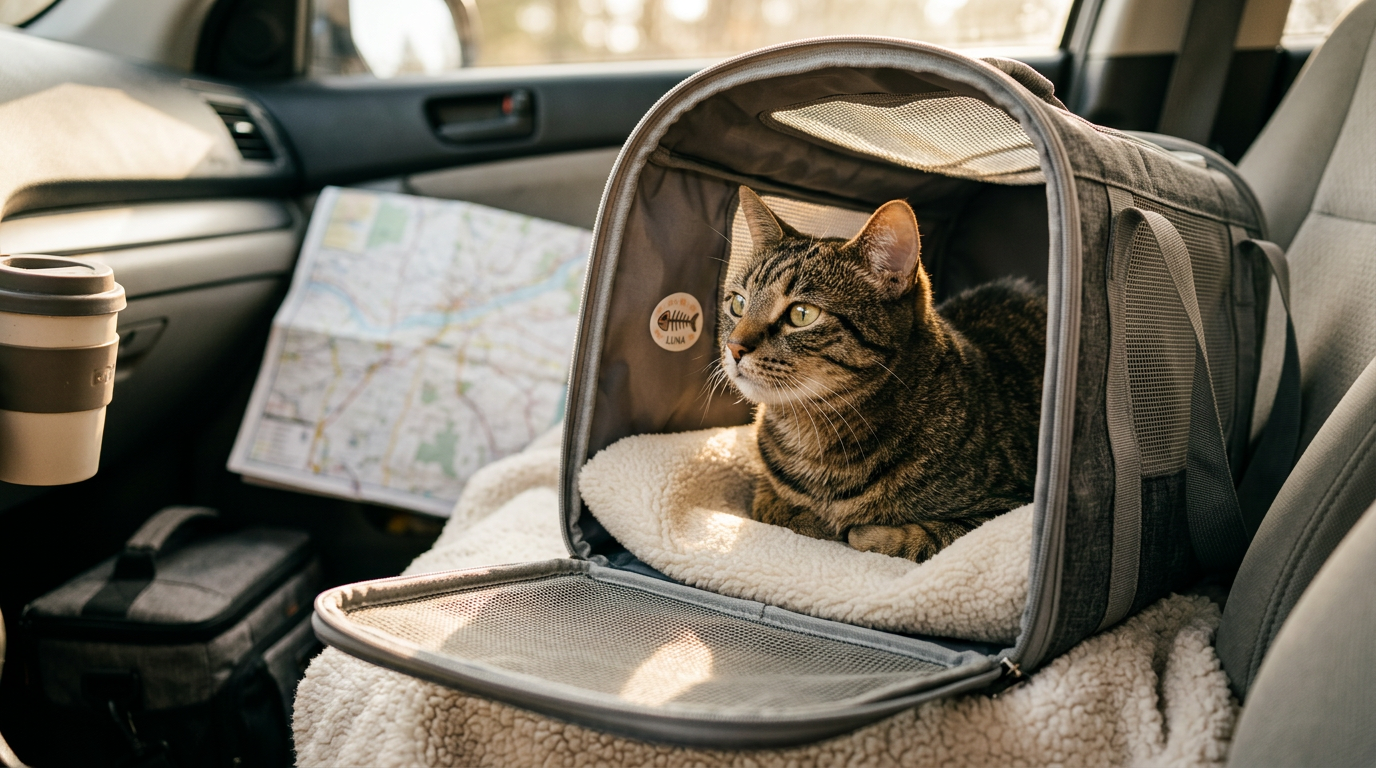
How to Travel with Your Cat Stress-Free: A Complete Guide for Cat Owners
If you've ever tried to put your cat in a carrier, you already know the look — flattened ears, wide eyes, and a sudden ability to make their body weigh three times more than usual. Traveling with cats is notoriously stressful, but it doesn't have to be. With the right preparation and the right tools, you can help your cat feel calm, safe, and even comfortable on the road.
This guide covers everything you need to know about reducing cat anxiety during travel — from carrier training to the science of cat calming pheromones.
Why Cats Get So Stressed During Travel
Cats are territorial animals. Their sense of safety is deeply tied to familiar smells, sounds, and spaces. The moment you put them in a carrier and take them out of their environment, their nervous system goes on high alert.
Common travel stressors for cats include:
- Unfamiliar smells — the carrier, the car, new locations
- Motion and vibration — even short car rides can trigger nausea and anxiety
- Loss of control — cats can't predict what's happening or where they're going
- Separation from their territory — their scent markers, their safe spots, their routine
- Noise — traffic, airports, unfamiliar voices
Understanding these triggers is the first step toward addressing them. Cat stress relief during travel isn't about eliminating every stressor — it's about reducing the overall load so your cat can cope.
Carrier Training: Start Before the Trip
The biggest mistake cat owners make is only bringing out the carrier on travel day. To your cat, the carrier becomes associated exclusively with stress — vet visits, disruption, the unknown.
Here's how to change that:
- Leave the carrier out permanently — make it part of the furniture. Put a familiar blanket inside.
- Feed your cat near (then inside) the carrier — positive association through food.
- Practice short "trips" — carry them around the house, then to the car and back, without going anywhere.
- Use calming aids inside the carrier — a worn t-shirt with your scent, or a pheromone sticker on the interior wall.
Carrier training takes time — ideally a few weeks before a big trip. But even a few days of exposure makes a measurable difference in cat anxiety levels.
The Science of Pheromones: Your Secret Weapon for Cat Calming
Pheromone therapy is one of the most effective and underused tools for cat stress relief. Here's how it works.
Cats communicate safety through chemical signals called pheromones. When your cat rubs their face on furniture or your legs, they're depositing F3 facial pheromones — essentially marking that space as "safe." These signals have a measurable calming effect on cats who encounter them.
F2 pheromones, meanwhile, are associated with social bonding and comfort — the signals kittens receive from their mothers.
Meowool™ POP-POP Calming Pheromone Stickers use a composite F2+F3 pheromone blend to recreate these natural "safe zone" signals in any environment. Stick one inside the carrier, on your cat's bed, or near their favorite resting spot — and the pheromones get to work immediately, lasting up to 48 hours per sticker.
Unlike sprays or diffusers, the sticker format means the calming signal travels with your cat — into the carrier, into the car, into the hotel room. No power outlet required. No alcohol or harsh chemicals. Just the same signals your cat's own biology already understands.
Day-of Travel Tips to Reduce Cat Stress
Even with great preparation, travel day can be intense. These practical tips help keep cat anxiety manageable:
- Apply a pheromone sticker 30 minutes before departure — give it time to diffuse into the carrier environment before your cat goes in.
- Cover the carrier with a light blanket — reducing visual stimulation helps cats feel less exposed.
- Keep your voice calm and low — cats read your energy. If you're anxious, they will be too.
- Avoid feeding 2–3 hours before car travel — reduces the chance of motion sickness.
- Bring familiar items — a worn t-shirt, their favorite toy, their usual blanket.
- Keep the car temperature comfortable — cats are sensitive to heat. Never leave them in a parked car.
- Talk to them softly during the trip — your voice is a familiar, reassuring signal.
Arriving at Your Destination
The stress doesn't automatically end when you arrive. A new space is a new territory — and your cat needs time to map it out.
When you arrive:
- Set up a "base camp" room first — one room with their litter box, food, water, and carrier. Let them explore from there.
- Place a fresh pheromone sticker in the new space — helps establish a "safe zone" scent quickly.
- Don't force interaction — let your cat come out on their own terms.
- Maintain their routine as much as possible — same feeding times, same rituals.
Most cats settle into a new space within 24–48 hours when given the right support. The combination of familiar scents, pheromone signals, and a patient owner makes all the difference.
0 comments